
NZAI-AI-201
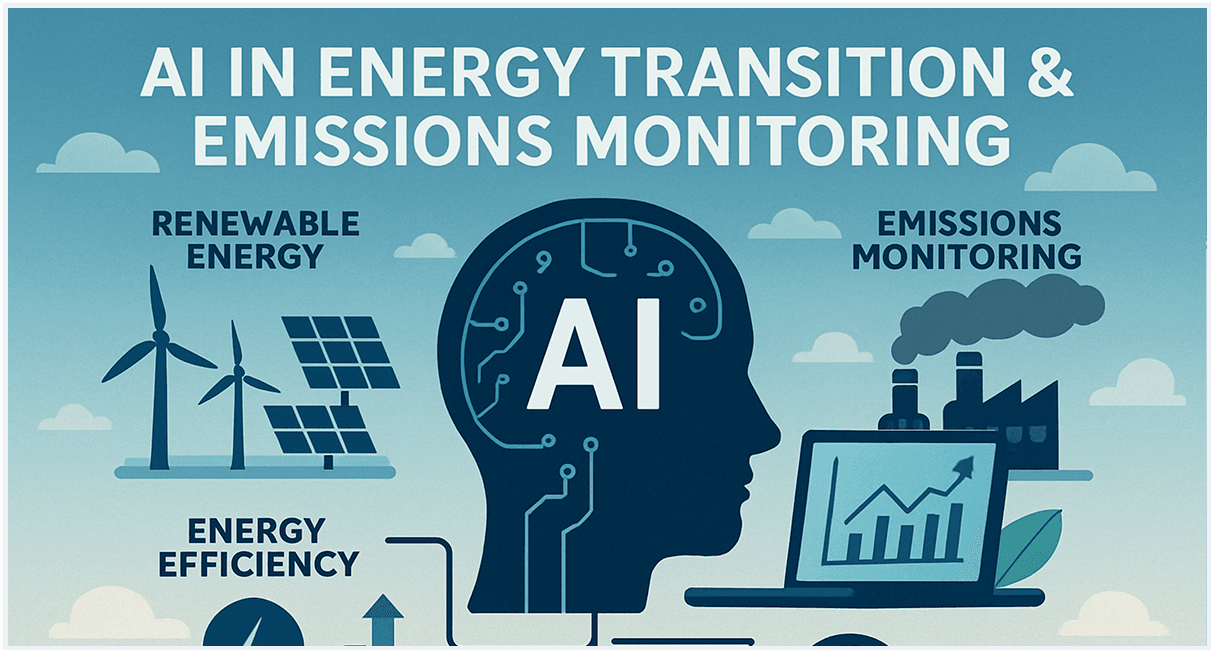
AI in Energy Transition & Emissions Monitoring
A practical, decision-focused introduction to using AI/ML for energy transition and emissions monitoring. Learn how to turn sensor, satellite, and operational data into forecasts, anomaly detection, and dashboards that support ESG reporting, reliability, and decarbonization outcomes.
Secure your spot now — limited seats remaining!

Real-World Datasets
Work with sensor, satellite, and operational time-series.
Edge → Cloud Pipelines
ETL/ELT patterns for IIoT & geospatial data.
Beginner–Intermediate
No heavy math; practical ML patterns & tips.
Templates & Dashboards
KPIs, alerting logic, and report-ready visuals.
Overview
Learn how AI/ML supports energy transition outcomes: forecasting demand & renewables, detecting anomalies and leaks, and monitoring emissions with sensor and satellite data. Convert raw data into decisions that improve reliability, safety, and ESG reporting.
Curriculum
- Energy-transition data landscape: sensors (SCADA/IIoT), satellites (e.g., multispectral), and weather feeds.
- Emissions basics: scopes, methane-specific challenges, and monitoring frameworks.
- Data engineering: ingest, clean, and align time-series & geospatial datasets (ETL/ELT patterns).
- Model patterns: forecasting, anomaly/leak detection, simple computer vision for flares/smoke.
- Geospatial concepts: rasters vs vectors, reprojection, and site-level overlays.
- Dashboards & alerting: KPI design, thresholds, and operator-friendly visuals.
- Governance & MLOps: model monitoring, drift, explainability, and audit trails.
- Case study: end-to-end pipeline from data to decision & report.
What Will You Learn
By the end of this program, you will be able to:
- Explain how AI/ML supports emissions monitoring and energy transition objectives.
- Design a lightweight data pipeline for sensor/satellite inputs and basic ML tasks.
- Build simple forecasting and anomaly detection workflows and interpret outputs.
- Create stakeholder-ready dashboards and summaries for ESG & reliability use-cases.
Practitioner Profile
Delivered by AI and energy data practitioners with experience deploying analytics for emissions, reliability, and decarbonization programs across industrial assets.
Instructors bring real project examples, emphasizing practical pipelines over theory-heavy math.